Why Does My Ostomy Bag Keep Leaking? 6 Tips to Stop Ostomy Bag Leaks
Ostomy bag leaks are one of the most frustrating things for people living with ostomies. They can happen at any stage of your journey, but can be more common during the first year while your body heals.
Beyond the inconvenience, leaks can cause painful skin irritation, shorten appliance wear time, increase supply costs, and create constant anxiety about unexpected failures impacting quality of life.
The good news? Most ostomy leaks are preventable.
With the right products, proper fitting techniques, and a few simple adjustments to your routine, you can achieve a secure seal that lasts longer and gives you greater confidence throughout the day.
Leaks Can Damage the Skin Around Your Stoma
When ostomy output comes into contact with the skin, it can begin to break down skin. This irritation can become painful and make it even harder for your ostomy wafer to stick, creating a cycle of repeated leaks and the potential for skin complications. Preventing leaks is one of the best ways to protect peristomal skin and improve wear time.
Understanding Why Ostomy Bags Leak
Before changing products, it's important to identify why your ostomy pouch is leaking. In many cases, the problem isn't the pouch itself—it's the fit, the condition of your skin, or how the appliance is applied. Understanding the cause can help you choose the right solution instead of relying on trial and error.
Stoma Shape and Height
A flush or retracted stoma makes it harder for output to flow directly into the pouch. Instead, output may collect beneath the wafer, weaken the seal and cause a leak.
Uneven Skin Contours
Skin folds, creases, scars, or areas around the belly button can prevent the wafer from lying completely flat. Even small gaps can allow moisture or output to work underneath the wafer or barrier ring.
Surface Contamination
Soap residue, lotions, oils, and other skin-care products can interfere with adhesive performance of the wafer, and ostomy wafer may not stick.
Moisture and Sweat
Perspiration gradually weakens adhesive, particularly during exercise, warm weather, or in humid climates. Active ostomates who swim frequently may experience shorter wear times because prolonged moisture can weaken the adhesive.
Hydrocolloid Breakdown
Hydrocolloid wafers are designed to absorb moisture from the skin. Prolonged exposure to ostomy output, however, can cause the material to swell and break down prematurely, leading to seal failure.
More ResearchEvery Ostomate Is Different
No two ostomies are exactly alike.
Your body shape, stoma size, skin condition, abdominal contours, activity level, and even climate all influence how well your appliance performs.
Finding the right combination of products often involves some trial and error—and that's completely normal.
Fortunately, most people can dramatically reduce leaks once they identify the products and techniques that work best for their unique situation, and maintain health of peristomal skin.
How to Stop Ostomy Bag Leaks
-
1. Start With a Proper Fit
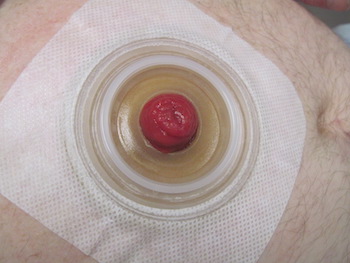
When you change an ostomy bag, if the opening is too large, output can reach the surrounding skin, cause irritation, and undermine the adhesive and ostomy seal.
If it's too small, the wafer may constrict the stoma and contribute to leakage around the edges.
For the best fit:
- Trim the wafer opening so it closely matches your stoma.
- Re-measure your stoma regularly, especially during the months following surgery.
- Consider a convex wafer if you have:
- A flush or retracted stoma
- Uneven abdominal contours
Convex systems are widely recommended by wound, ostomy, and continence (WOC) nurses because they help create a more reliable seal for many people.
Many manufacturers offer free product samples so you can determine which system works best before purchasing.
-
2. Clean Skin = Strong Adhesion
Avoid using:
- Soap that leaves residue
- Baby wipes
- Oil-based cleansers or moisturizers
Instead, use a silicone-based adhesive remover from manufacturers such as Hollister®, Coloplast®, ConvaTec®, or Skinister Medical.
Unlike many traditional removers, silicone-based formulations evaporate cleanly without leaving residue that can interfere with adhesion.
For sensitive skin, Skinister Medical Adhesive Remover is formulated to evaporate more slowly, helping reduce skin dryness during appliance changes.
-
3. Use Ostomy Paste Correctly: It’s Not Glue
Think of paste as caulking rather than adhesive.
Its purpose is to fill small gaps, creases, or uneven areas so the wafer can sit flat against the skin.
Use a small amount in skin folds or depressions, or around the opening of the wafer if additional sealing around the stoma is needed.
Avoid spreading paste across the entire wafer surface, or relying on it to hold the appliance in place.
When used properly, paste improves conformity—not adhesion.
-
4. Add a Barrier Ring Between Your Skin And The Wafer
Barrier rings act like a gasket between your skin and the wafer. Their soft, moldable material conforms to uneven skin surfaces, filling small gaps where leaks commonly begin.
Barrier rings are especially helpful if you have:
- Skin folds
- Creases
- Surgical scars
- Challenging stoma placement
For many ostomates, adding a barrier ring significantly improves seal reliability and wear time.
-
5. Use Skin Barrier Products Only When Needed
Skin barrier wipes and sprays are designed primarily to protect damaged or irritated skin—not to improve adhesion. In fact, many barrier films actually reduce adhesive strength.
Laboratory testing has shown that:
- Non-tacky barrier films, such as Cavilon™, may reduce adhesive peel strength by as much as 70%.
- Even tacky barrier products, such as Skin Tac™, can slightly reduce adhesive strength.
For the strongest seal:
- Use skin barriers only where protection is needed.
- Avoid applying them routinely to healthy skin if maximizing adhesion is your primary goal.
-
6. Consider a Medical Adhesive for Extra Security
If you've already optimized your appliance fit and skin preparation but still experience leaks, adding a medical adhesive may be the next step to improve wear time and seal reliability.
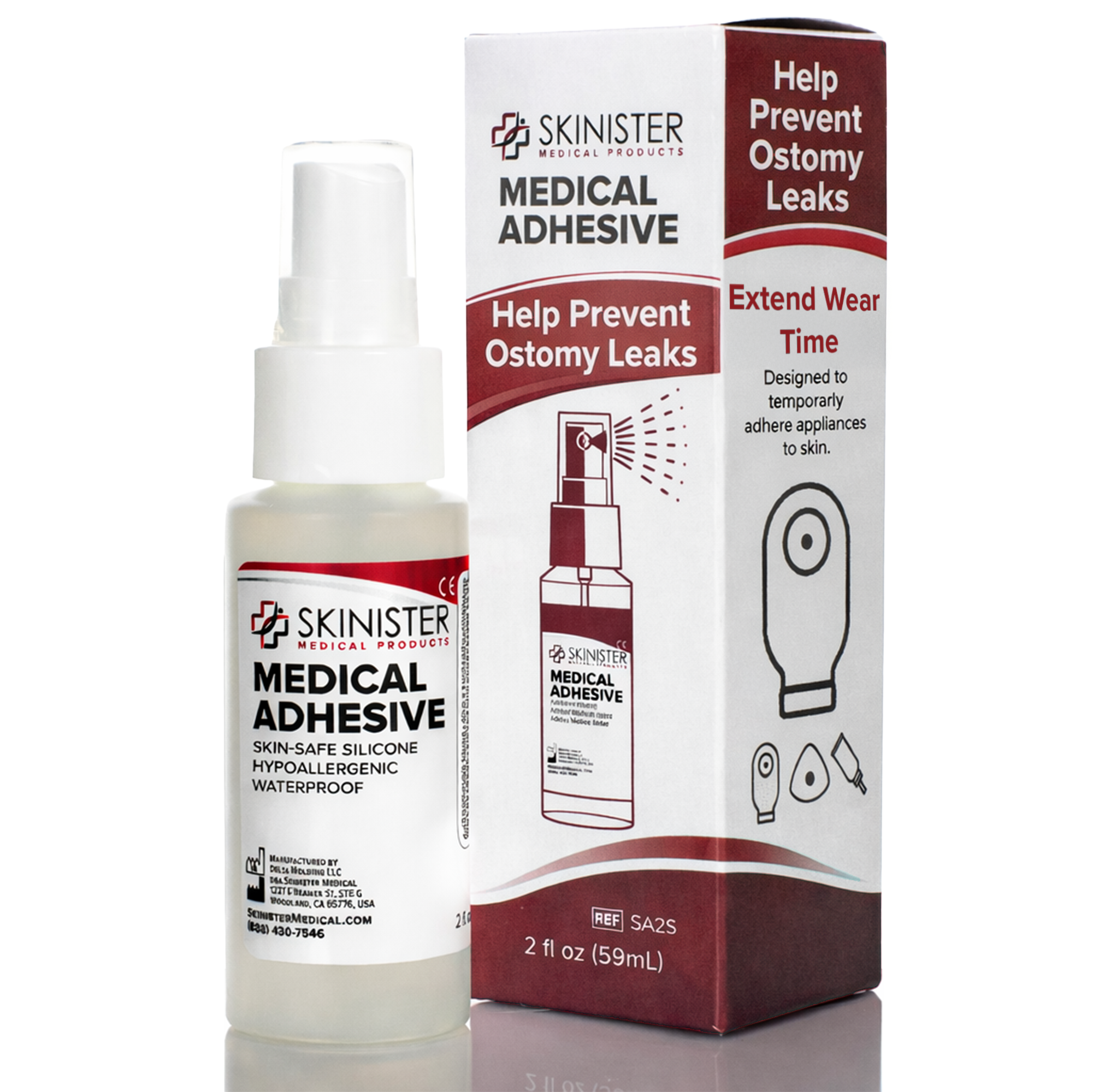
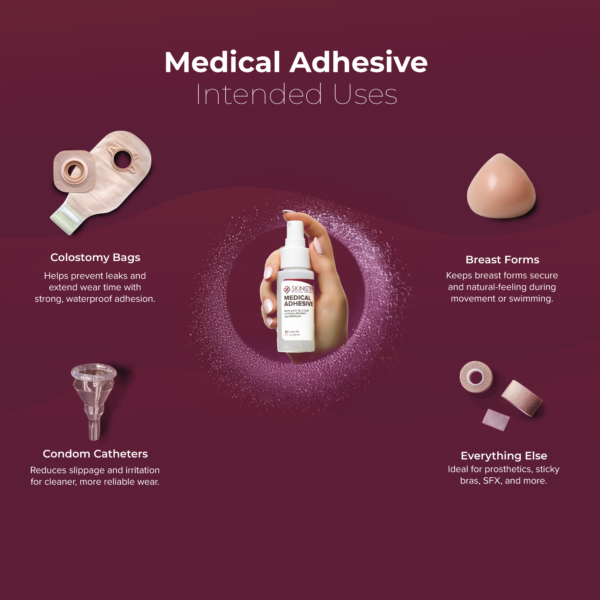
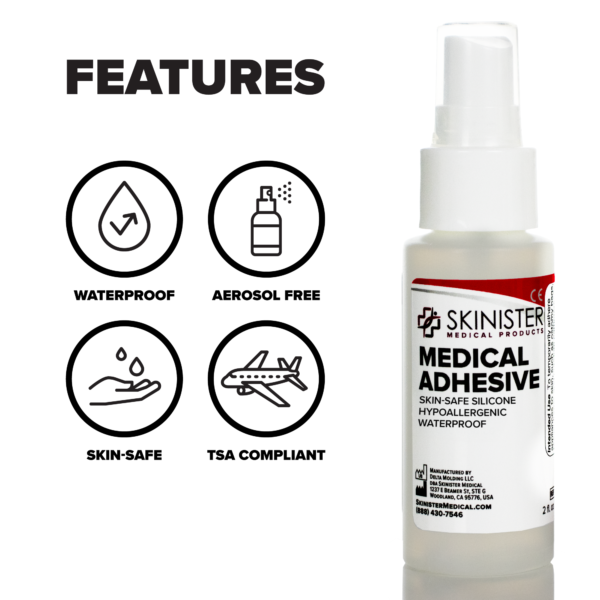
Skinister Medical Adhesive is designed to:
- Improve adhesion and extend wear time
- Reduce leaks
- Maintain a strong seal during bathing, sweating, and everyday activities
Laboratory testing has shown that Skinister Medical Adhesive can increase adhesive peel strength by up to 100%. In user testing, 88% of participants reported fewer leaks.
How to Apply It
- Spray Skinister Medical Adhesive directly onto clean skin around the stoma.
- Spread it into a thin, even layer with your fingertip.
- Allow it to dry completely (about one minute).
- Apply the wafer using moderate, even pressure.
For maximum adhesion, apply the adhesive to both the skin and the wafer. Testing shows this can increase bond strength by up to 50% compared with applying it to the skin alone.
If you're struggling with frequent leaks or short wear time, request a free sample of Skinister Medical Adhesive and see whether it improves your results.


Living With An Ostomy Doesn’t Mean Putting Up With Constant Leaks
Most leakage problems can be significantly reduced—or eliminated—by focusing on three key areas:
- Proper appliance fit
- Careful skin preparation
- Choosing products that maximize adhesion
Every ostomate's needs are different, so don't be discouraged if it takes a little experimentation to find the combination that works best for you. With the right techniques and products, you can enjoy longer wear times, healthier skin, and the confidence that comes from knowing your appliance will stay securely in place, giving you the confidence to focus on living your life—not worrying about your ostomy.
When to Contact Your WOC Nurse
If you've tried multiple products and continue experiencing frequent leaks, don't assume it's something you have to live with. A wound, ostomy, and continence (WOC) nurse can evaluate your stoma, recommend different pouching systems, and identify issues such as changes in stoma size, abdominal contours, or skin condition.
Note: This article is intended for educational purposes and does not replace personalized advice from your healthcare provider or WOC nurse.
Summary Table For Preventing Ostomy Leaks
| Problem | Most Likely Cause | Solution |
|---|---|---|
| Leaking under wafer | Poor fit | Resize wafer |
| Wafer won't stick | Skin residue | Clean with silicone remover |
| Leaks near belly button | Uneven skin | Barrier ring |
| Short wear time | Sweat or moisture | Medical adhesive |